Solo Repetition or Shared Practice? Choosing the Right Setting
Choose solo or shared practice by matching the setting to your skill’s feedback needs, so each session has a clear target and useful next step.
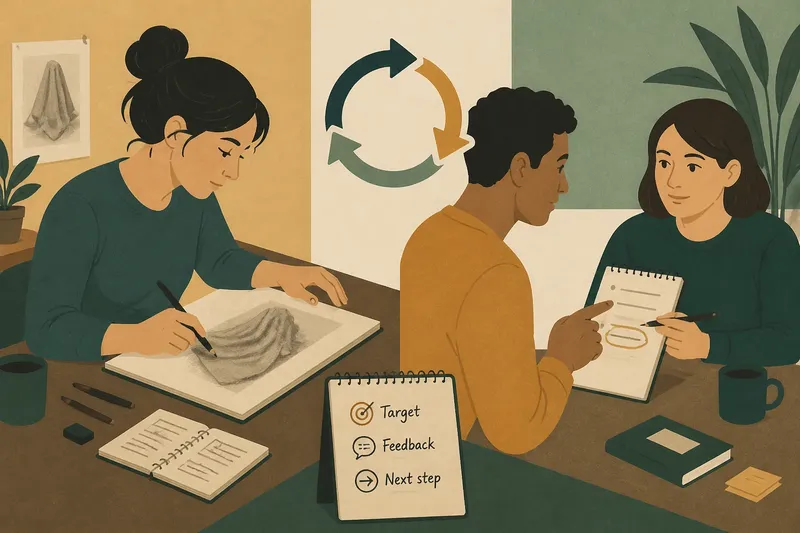
Choose solo or shared practice by asking what your next attempt needs: uninterrupted repetition, another person’s response, or both. A singer refining a phrase may need quiet to hear each breath; someone rehearsing a difficult conversation needs another person to respond. Match the setting to the skill’s immediate demand, not to a general preference for working alone or together.
Choose the setting by the feedback the skill needs
Name the specific part of the skill you want to improve. “Get better at drawing” is too broad to guide a session. “Make the shadow edge on a folded cloth look gradual” gives you something to inspect and repeat.
Then ask where useful feedback can come from. Some skills provide it directly: a keyboard note sounds wrong, a clay form slumps, or a sentence feels clumsy when you reread it. Other skills depend on another person’s response. You cannot fully rehearse listening, negotiation, or audience awareness without someone contributing a perspective.
- If the target is a small movement, phrase, or decision that needs uninterrupted repetition, practice alone; if another person’s reaction is part of the skill, invite a partner instead.
- If you can inspect each attempt yourself, use solo practice; if you cannot tell how another person interprets your work, ask someone to respond.
- If you need both repetition and an outside response, start alone and schedule a focused partner check afterward; if the task does not need outside feedback, keep the session solo.
- If you cannot name an observable change, narrow the target before practicing; if you can, write it down and begin.
- If a partner’s role is unclear, agree on one thing to observe before starting; if you cannot agree, practice alone until you have a specific question.
- If feedback is likely to interrupt concentration, save it for a planned pause; if the exchange itself is the skill, keep the partner involved during the attempt.
Write down what would count as a noticeable improvement before you begin. That keeps the session focused on the work rather than on how long you practiced.
Use solo practice to protect concentration
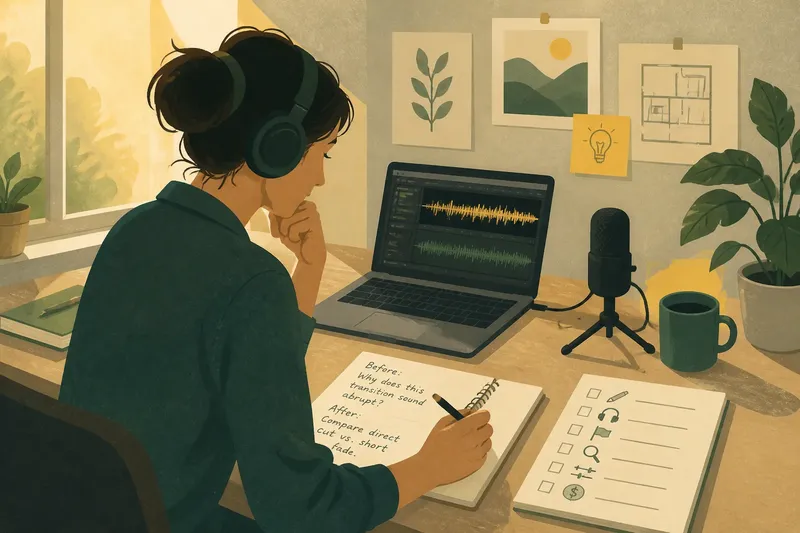
Working alone helps when you need a steady rhythm or close attention to small differences. Set out only the materials for the chosen task: a sketchbook and charcoal for value studies, a notebook for revising a passage, or a metronome for a music exercise. Keep the target narrow enough to notice what changes from one attempt to the next.
Choose a repeatable cue. A writer might revise each sentence to remove an unnecessary clause, while a ceramicist might make several small coils and watch for consistent joins. Pause between attempts to inspect the result. Repeating automatically can reinforce the same unhelpful choice.
Solo practice gives you room to try an awkward approach without managing another person’s attention. Use that freedom to experiment, but keep a brief record of what you changed and noticed. A few words beside the work can help you resume later without turning the session into a diary.
Bring another person in when exchange is part of the skill
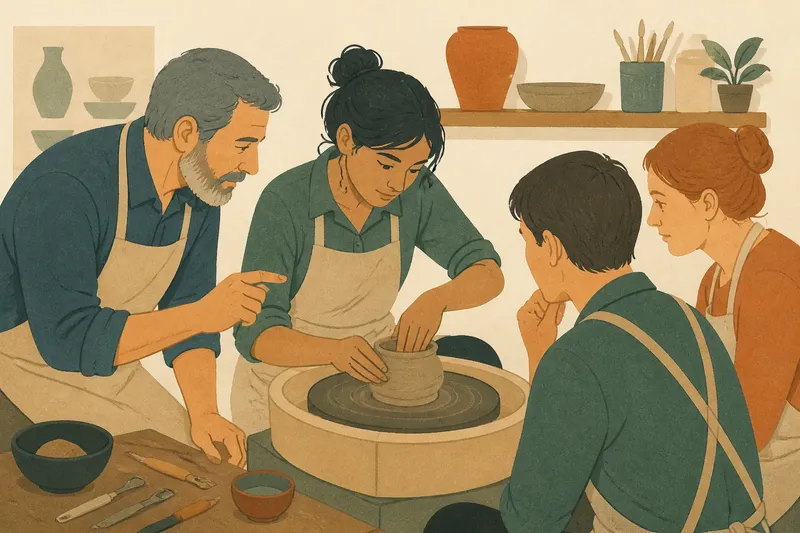
Shared practice helps when you need a response you cannot generate alone. A language learner needs someone to understand and answer; a presenter needs a listener’s account of what was clear; a designer may need a collaborator to interpret a rough instruction. The other person is not there merely to watch. Their contribution creates the conditions for practice.
Agree on a simple structure before starting. Say what you are practicing, what kind of response would help, and when feedback should come. If you are rehearsing a presentation, ask a listener to note where the main idea becomes clear. If you are practicing a recipe technique with a colleague, ask them to observe hand positioning rather than critique the whole dish.
Say you are learning to explain a complicated process to a new teammate. You write a short explanation alone and mark terms that might be unfamiliar. Then you ask a colleague to listen and identify one point where they would need an example. The expected result is a specific place to revise, not a broad judgment about your communication.
Keep the exchange manageable. A partner who supplies constant advice can break concentration, while a partner who offers no response may leave you without the feedback you sought. Ask for one useful observation at a time.
Combine the settings without crowding the session
Many skills benefit from a sequence: prepare alone, practice with someone, then return to solo work. The first phase lets you identify a question. The shared phase exposes the work to another person’s response. The final phase gives you space to apply what you learned and check the adjustment.
Imagine you are preparing to lead a meeting. You outline the opening alone, rehearse it with a colleague acting as a skeptical participant, then revise the opening privately. Each setting has a distinct job. The colleague creates a realistic response; they do not need to rewrite the entire meeting plan.
Keep the handoff precise. After shared practice, note the single adjustment you want to try. After solo practice, note the question you want a partner to help answer. This prevents each session from becoming a vague continuation of the last.
How can you choose the next practice setting?
How do you know whether to practice alone?
Work alone when the next attempt depends on sustained attention or repeated comparison that another person would interrupt. Choose a small target and a way to inspect each result.
When should you ask someone to join?
Invite someone when their response, interpretation, or behavior is part of the skill you are building. Tell them what to observe so the session produces relevant feedback.
What if a practice partner gives too much advice?
Before the next attempt, ask your partner to hold comments until a specific pause and focus on one feature, such as where your explanation becomes unclear. If they continue interrupting, end the shared portion and return to solo practice; you can revisit the feedback later.
Can you practice both ways in one session?
Yes, if each setting serves a separate purpose and the transition is clear. Experiment alone, get a focused response from a partner, then use solo time to apply one adjustment.
Review the session and choose what comes next
Compare the result with the target you set at the start. Ask what changed, what remains uncertain, and what kind of feedback would help next. If you made a useful adjustment alone but cannot tell whether it works for an audience, arrange a short shared session. If a partner exposed a weak point, return to private repetition before asking for another response.
Do not judge a session only by whether the work felt smooth. A useful attempt may reveal a specific obstacle. Record it in plain language, along with the next action: repeat the difficult transition, ask a listener where the explanation loses them, or try a different arrangement of materials.
Choosing between solo repetition and shared practice gets easier when you match the setting to the feedback your skill requires. For your next session, define one observable target, decide who or what can provide the needed response, and set up the work accordingly. If you are unsure which setting fits, begin with the part you can inspect alone and bring in a partner only for the question you cannot answer yourself.